How Do You Know What Size Shim You Need for a Door
Tips for Hanging Doors
These vii pro tips will help you hang doors faster and amend.
Introduction
A veteran carpenter shares his secrets about how to hang a door plumb and true even if the rough opening isn't perfect. Even a novice tin master his techniques with a piffling practice.
Tools Required
Materials Required
- 3-in. screws
- Wood shims
Projection step-by-stride (7)
Step one
Shim before the door goes in
Shim the piece of cake way
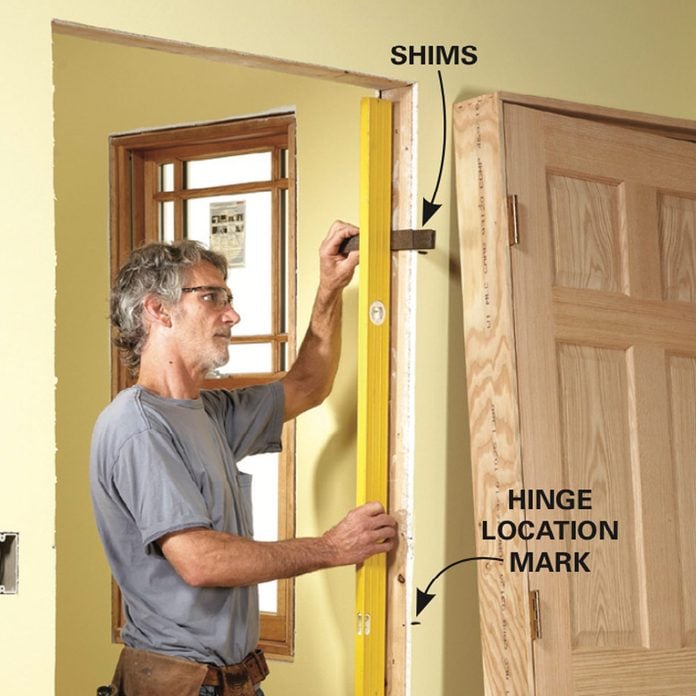
Mark the location of the hinges on the drywall alongside the opening so y'all'll know where to place the door shims. Place door shims at the peak and bottom hinge locations using a long level or a straight lath and a short level. So add together the center door shims.
You already know the standard approach to hanging a door: Gear up it in the crude opening, so level, shim and nail information technology. This traditional approach works fine in a perfect world where walls are always plumb, floors are level and you accept plenty of time to fuss with the fit. But in the real world, some nonstandard tricks tin can help you lot cease the job faster and ameliorate.
The usual method of holding the door frame in place while you shim behind the hinge side is awkward. Information technology's a lot easier to shim the hinge side of the crude opening earlier you lot put in the door frame. After that, it'southward a simple chore to set the interior door frame in place, screw or nail it to the shims, and so shim the strike side. Mensurate the width of the rough opening before yous start shimming to come across how much shim space is available. Ordinarily the crude opening allows for about 1/2 in. of shimming on each side of the frame. If the rough opening is extra wide, you tin can utilise fewer shims past tacking scraps of i/2-in. plywood at the hinge locations offset, and then add shims to plumb the jamb.
What is a Pocket Door?
Pace two
Make certain an exterior door clears the rug
Avert clearance problems

Screw a strip of plywood to the lesser of the crude opening to raise the door and prevent it from rubbing on the floor inside.
Virtually of the time, you can simply ready your new outside door frame straight on the subfloor and the door volition easily clear carpeting or a throw carpet. Only if you're replacing an old door with a thick sill, or if the flooring volition exist built upwardly with tile, thick rug or an extra layer of wood, you could accept a trouble. And there'southward no easy solution later on the door is installed. You can't merely trim the bottom, because then the door won't seal confronting the sill. To avoid this problem, add a spacer under the door before you install it. The fundamental is to determine where the elevation of the tile, carpet or throw rug will be, and and so raise the door frame to leave almost a 1/2-in. space under the door (photo).
How to Finish Door Drafts Effectually Entry Doors

Step iii
Ready interior jambs on spacers
Avoid trimming door bottoms
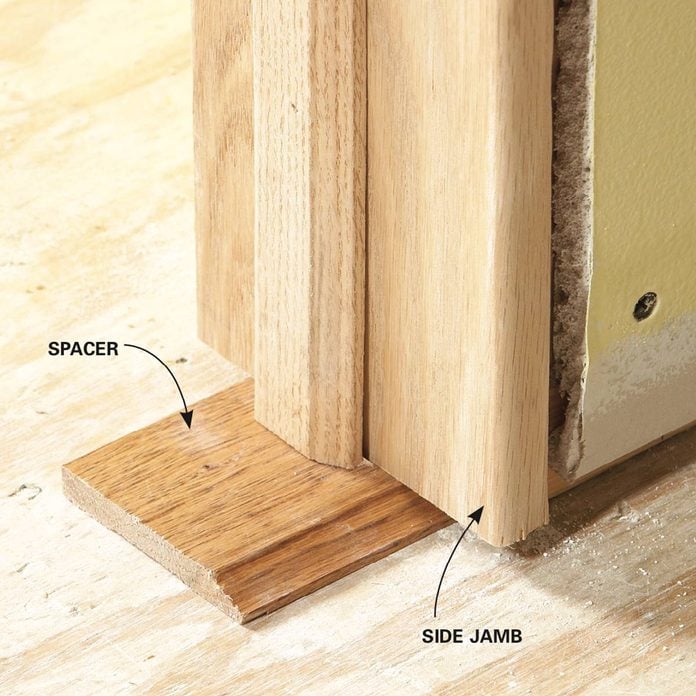
Raise interior door jambs with scraps of trim to brand sure the door will articulate the rug. If yous gear up the interior door jambs directly on the subfloor, there's a good adventure the door volition rub confronting the carpeting subsequently. Of course, you can cutting off the bottom of the doors, but information technology's easy to avoid this extra work by planning ahead. Discover out the thickness of the finish floor and and so summate where the bottom of the door volition be. Plan the installation so at that place will exist almost 1/two to iii/4 in. of space nether the door. Usually setting the doorjambs on scraps of three/8- to 1/2-in.-thick trim volition put the door at the correct height.
How to Make a DIY Rustic Barn Door and Hardware
Step iv
Hidden screws make exterior doors stronger
Hide the screws
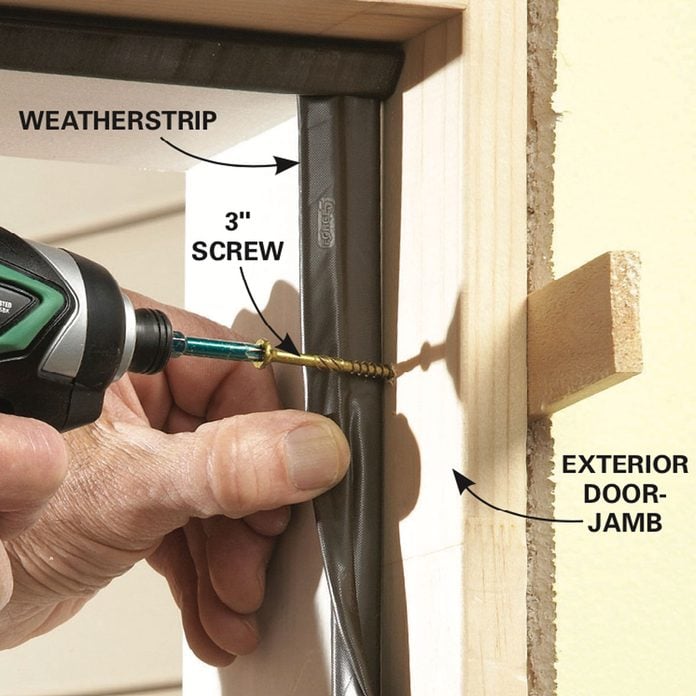
Pull dorsum or remove the weather strip on the latch side of the door frame and bulldoze screws where they'll be hidden. In that location are many benefits to using screws rather than nails to install exterior doors. They can be adjusted and won't hands pull out or loosen. Just you lot don't desire to leave the painter with the chore of filling big, ugly spiral holes. The trick is to hide the screws under the weather stripping on the latch side. On the hinge side, you can simply supervene upon one screw in each hinge with a matching 3-in.-long screw. Always first by drilling a clearance hole that allows the screw to slide freely in and out of the pigsty. This ensures the screw will pull the jamb tight to the shims, and allows for adjustment if needed. Don't let the spinning screw rub against the weather strip—it will slice right through. I know this from biting feel.
Cracking Tips for Painting Doors
Step 5
Tune up the crude opening
How to build a door frame right: Check for plumb
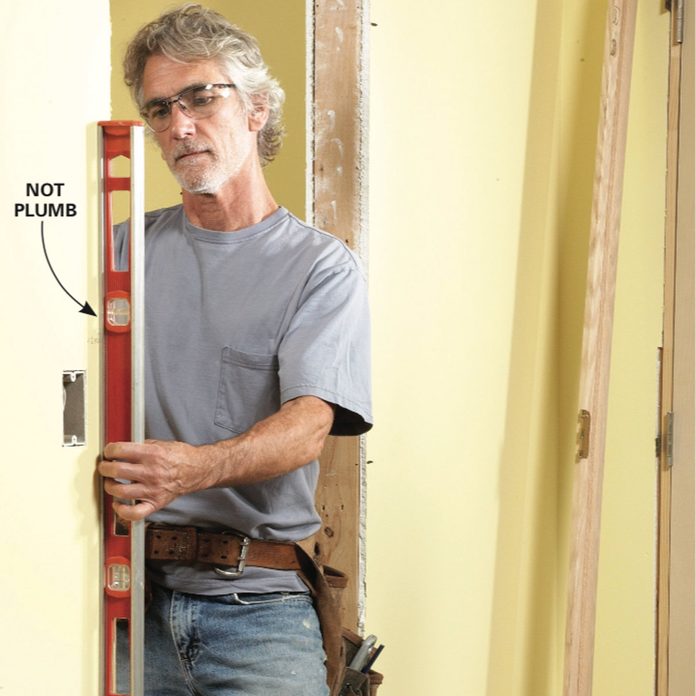
Check both sides of the door opening. If they're more than than 1/4 in. out of plumb, adjust them before you install the door.
Nudge the wall
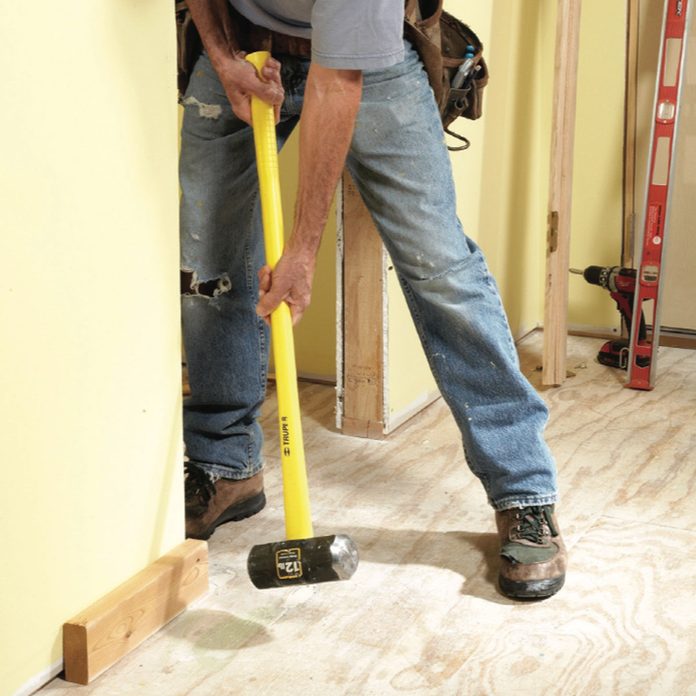
Protect the wall with a 2x4 scrap while you lot movement the bottom of the wall over with a sledgehammer. When the wall is plumb, toe-screw the lesser plate to the floor to hold it in place.
Twisted or out-of-plumb rough openings enhance havoc with door installations. If you install the jambs to follow the walls, the door is likely to swing open up or shut on its own. On the other hand, if y'all plumb the jambs against the out-of- plumb crude opening, the trim will be hard to install.
As long equally the bottom of the wall isn't held in place by flooring, there's a simple solution. Just motion the studs on both sides of the opening back to plumb. Don't recollect you lot can do this with your trim hammer, though. You'll demand a maul or a sledgehammer.
How One Pro Installs a Door in Four Easy Steps
John Schumacher, owner of Millwork Specialties Ltd. in Minnesota, has been installing doors and millwork for more twenty years. He'south learned to avoid callbacks past doing the job right the commencement time. Here's his door installation method in a nutshell.
1. Plumb the hinge jamb
The swivel side of the door has to be plumb or the door will swing open up or airtight on its own. Commencement by shimming the swivel side of the crude opening. First make marks to indicate the centers of the hinges. Then use a long level or a long, directly board forth with a brusque level to plumb the shims. Tack a pair of tapered shims at the height hinge. Then install the lesser shims and finally fill in the middle.
2. Screw the hinge-side jamb to the stud
Remove the door from the frame and set information technology aside. Remove the hinge leaves from the jamb. Set the door frame in the opening with the jamb resting on the finished floor (Photograph 2) or on a spacer. Drive 3-in. screws through the jamb where they'll be hidden by the screws.
3. Adjust the gap along the pinnacle
Slide shims between the flooring and the latch-side jamb until the head jamb is level. At present reinstall the door hinges and the door. Suit the door shims under the latch-side jamb until the gap betwixt the pinnacle of the door and the top jamb is even.
iv. Shim and nail the latch-side jamb
Shim behind the latch-side jamb to make an even gap between the door and the jamb. Unremarkably 3 or four sets of door shims, evenly spaced along the jamb, are plenty. Drive 2 finish nails into each ready of shims to hold the jamb in place. Cut off the protruding door shims with a fine-molar saw or a utility knife.
How to Remove a Door
Step 6
Trim the bottom to level the pinnacle
Cheque with a level
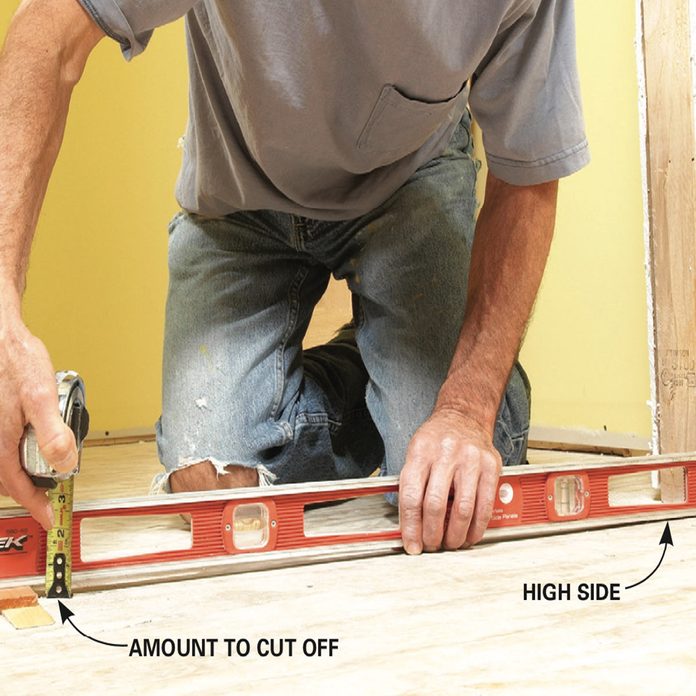
Level across the opening and shim up 1 side until the bubble is centered. The distance between the level and the floor tells you how much to cutting off the jamb.
Cut the high-side jamb
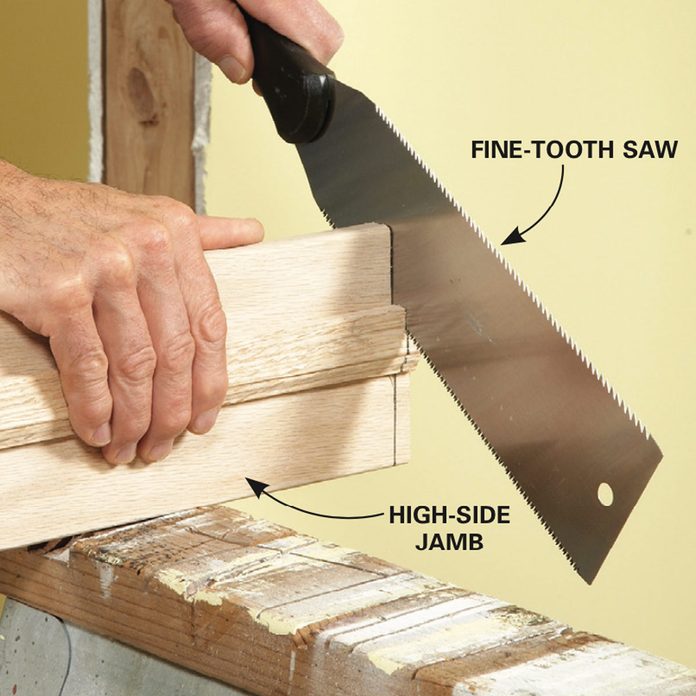
Trim the jamb with a fine-tooth saw. A "Japanese"-style pull saw cuts fast and leaves a make clean cut. Old houses are notorious for having sloping floors. Even some newer houses settle in unexpected ways. If yous don't cut the interior door jamb to compensate for the out-of-level floor, yous could accept a problem getting an even space between the elevation of the door and the head jamb. This is critical if you're installing a door over existing flooring where the jambs accept to fit tightly to the floor. Photos 1 and 2 evidence how to trim the jambs to fit a sloping floor.
How to Replace an Exterior Door
Step 7
When installing door hinges: Hibernate screws behind the hinges
Apply screws, non nails
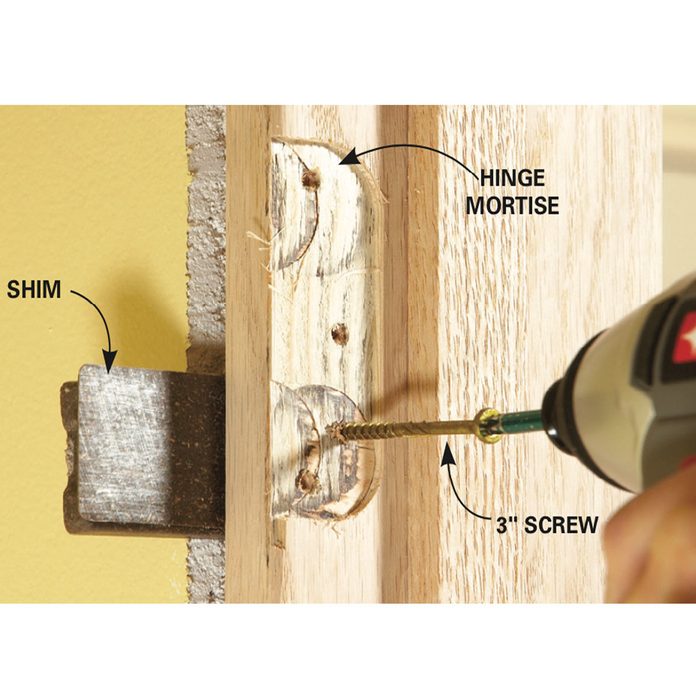
Spiral through the jamb in the hinge mortise. The screws will hold ameliorate than nails and will be hidden by the hinges. Screws are ameliorate for securing the hinge jamb because nails tin work loose. Yous can easily replace ane of the short hinge screws with a long screw, simply it tin be hard to find a strong spiral that matches the other screws. Here'southward a trick we learned. Hide the spiral behind the hinge. It only takes a infinitesimal or two to remove all the hinges and gain access to this area. Then you can drive a cocky-drilling screw through the jamb with ease. Make sure the jamb is straight and plumb before you lot reinstall the hinges.
Trouble-Shooting Tips
Door Won't Latch
Out-of-plumb jambs or a warped door can cause this. If the door won't latch considering information technology's hitting the latch-side terminate on the pinnacle or bottom, the prepare is to move the end. If it only needs a lilliputian adjustment, you can just tap it over with a hammer and a cake of wood. Otherwise, pry it off carefully, and with the door closed and latched, reinstall it confronting the door.
Door Binds and Resists Closing
If the door isn't rubbing against the jamb, simply there'southward tension when you attempt to shut information technology, then it'due south bounden on the hinge jamb. Unremarkably this means you haven't shimmed correctly and the jamb isn't at a right angle to the wall. Fix this trouble by adjusting the swivel-side door shims to twist the jamb back to a right angle with the wall.
All Nigh Smart Door Locks: Keyless Entry, Bluetooth, and More
Originally Published: May xx, 2019
lombardotheirried.blogspot.com
Source: https://www.familyhandyman.com/project/tips-for-hanging-doors/
0 Response to "How Do You Know What Size Shim You Need for a Door"
Post a Comment